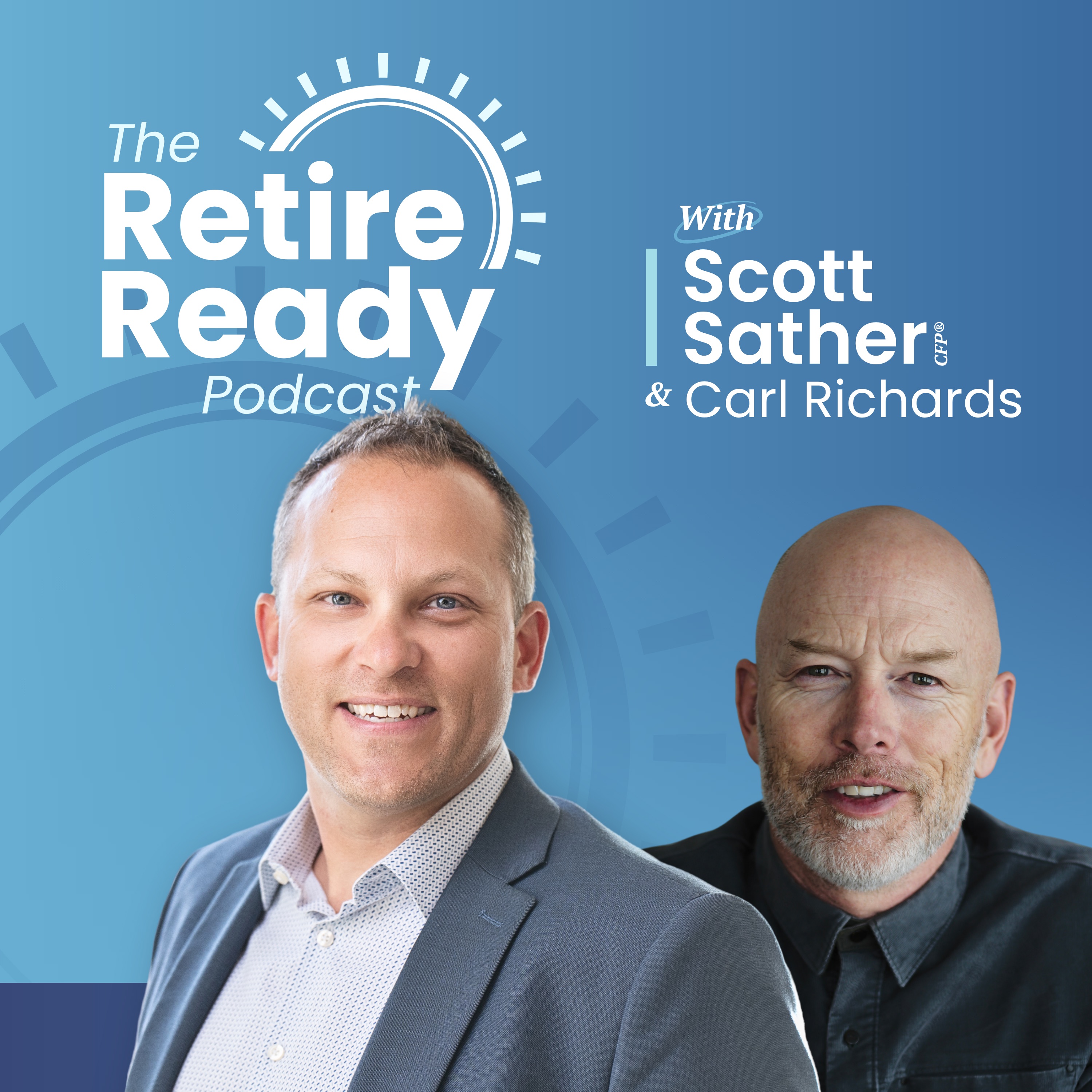
Episode 16: Using Market Prices, Not Predictions

Use Market Prices, Not Predictions
Episode 16 | Investment Philosophy Series — Part 3
For decades, investors have been presented with two main approaches to investing: active management, which attempts to outperform the market, and passive investing, which seeks to capture the returns of a market index. But is there another way?
In this episode of the Retire Ready Podcast, Scott Sather shares his personal journey from selecting actively managed mutual funds to embracing an evidence-based investment philosophy. Along the way, he reflects on the challenges of relying on star fund managers, the impact of investment costs, and the research that changed how he approaches portfolio management.
Drawing on studies from Eugene Fama and Kenneth French and recent Canadian investment industry data, Scott explores the strengths and limitations of active and passive investing—and why he believes evidence-based investing offers a compelling alternative.
Learn how using market prices, rather than predictions, can provide a disciplined framework for pursuing higher expected returns while keeping diversification, costs, and long-term financial goals in focus.
In This Episode
Scott shares how his investment philosophy evolved over nearly three decades in financial services, from selecting actively managed mutual funds to discovering an evidence-based approach grounded in financial science.
Along the way, he explores why investment costs matter, what the research reveals about skill versus luck, the growth of passive investing in Canada, and how an evidence-based strategy can use market prices rather than predictions.
Episode Highlights
- 00:00 — Introduction: Is there a third way to invest?
- 01:00 — Scott's early career and traditional active management
- 02:28 — The challenge of changing fund managers and deferred sales charges
- 03:00 — Bill Miller's remarkable performance streak and the 2008 financial crisis
- 03:35 — Fama and French: Investment skill versus luck
- 04:55 — Scott's journey toward evidence-based investing
- 05:16 — John Bogle, Keith Matthews, and Dimensional Fund Advisors
- 06:14 — Understanding passive and index investing
- 06:54 — The active versus passive investing landscape in Canada
- 08:07 — The limitations of index investing and the Nortel example
- 09:09 — Introducing evidence-based investing
- 09:54 — Why the price you pay matters
- 11:12 — Using market prices and expected returns in bonds
- 12:04 — Why higher expected returns aren't guaranteed
- 12:55 — Comparing the three investment philosophies
- 13:36 — What's next: Understanding the dimensions of expected returns
Research and Resources Mentioned
The Empowered Investor — Keith Matthews
Keith Matthews' book played an important role in Scott's transition toward evidence-based investing. Learn more about the book and request or download a copy.
The Empowered Investor — Book and Download (E-Book available for free)
The Little Book of Common Sense Investing — John C. Bogle
A foundational book on the benefits of low-cost index investing and the impact of investment expenses on long-term returns.
The Little Book of Common Sense Investing — Wiley
Luck versus Skill in the Cross-Section of Mutual Fund Returns — Eugene Fama & Kenneth French (2010)
Academic research examining whether actively managed mutual fund performance can be attributed to investment skill or luck, and the impact of investment costs on investor returns.
Read the Research Paper — The Journal of Finance
The Passive vs. Active Fund Monitor — PWL Capital (Spring 2026)
Raymond Kerzérho's report examines the Canadian, U.S., and global active-versus-passive investment landscape, including market share, investment flows, and management fees through December 2025.
Dimensional Fund Advisors
Learn more about Dimensional's systematic, research-based approach to investing and the application of financial science in portfolio management.
Dimensional — Our Investment Approach
Additional References
Bill Miller — The Man Who Beat the S&P
Scott discusses Bill Miller's fifteen consecutive years of outperforming the S&P 500 and the challenges that followed.
The Fall and Redemption of Bill Miller, Once the Greatest Money Manager of Our Time
Nortel Networks and the TSE 300 Index
The rise and fall of Nortel illustrates how market-capitalization-weighted indexes can become concentrated in individual companies.
Timeline: Nortel – The rise and fall of a telecom giant
Related Retire Ready Podcast Episodes
Episode 6 — The Value of Advice with Dr. Preet Banerjee
https://www.awakenwealth.ca/podcast/6-the-value-of-advice-with-dr-preet-banerjee
Episode 13 — Talking Your Money with Carl Richards
https://www.awakenwealth.ca/podcast/13-talking-your-money-with-carl-richards
Episode 14 — Markets Work
https://www.awakenwealth.ca/podcast/episode-14-markets-work
Episode 15 — [Insert episode title]
https://www.awakenwealth.ca/podcast/episode-15-dont-play-the-losers-game
Coming Up Next
Episode 17 — The Dimensions of Expected Returns
In the next episode, we'll look more closely at where investment returns come from, including the importance of company size, relative price, and profitability in stocks, along with the characteristics that influence expected bond returns.
Have a Question?
Have a question about today's topic or a suggestion for a future episode? We'd love to hear from you.
Email: info@retirereadypodcast.com
For more financial planning and retirement insights, visit Awaken Wealth Management.
Resources
Key Takeaways
- Active investing faces significant challenges. Consistently identifying winning stocks, timing markets, or selecting outperforming investment managers is extremely difficult.
- Past performance doesn't guarantee future success. Research from Eugene Fama and Kenneth French demonstrates how difficult it can be to distinguish genuine investment skill from luck.
- Active management still dominates in Canada. At the end of 2025, 77.4% of Canadian retail mutual fund and ETF assets were actively managed, despite the continued growth of passive investing.
- Investment costs matter. Canadian actively managed funds had an average management expense ratio of 1.28%, compared with 0.29% for passive funds, according to PWL Capital.
- Index investing offers important advantages. Low costs, diversification, and eliminating the need to identify winning managers make indexing a sensible investment approach.
- Evidence-based investing offers a third philosophy. It uses market prices and insights from financial science to systematically pursue higher expected returns without relying on market predictions.
- A successful investment experience requires discipline. Higher expected returns aren't guaranteed, and a sound investment philosophy should support your financial goals and be one you can stick with.
Transcript
Evidence-Based Investing: Using Market Prices Not Predictions
[00:00:00]
[00:00:05] Welcome to theRetire Ready podcast, the podcast that helps Canadians prepare for all thatretirement brings. I'm your host, Scott Sather, Founder, President, andCertified Financial Planner at Awaken Wealth Management, and Portfolio Managerwith Awaken Investments of Aligned Capital Partners in Regina, Saskatchewan.
[00:00:20] Thanks for joiningme today. We're continuing our investment philosophy series with part three ofeight. We've talked about how markets work and why trying to outguess them isso difficult. So here's the next question. If we're not gonna try to out-predictor outguess the market, how should we invest?
[00:00:35] For years, investorswere offered what sounded like two choices: pay an active manager to beat themarket or buy an index fund and accept the market's returns. But I thinkthere's actually a third option, and what many would call evidence-basedinvesting. So today, I wanna explain what made me change my own thinking afteryears in the industry, and why I believe using market prices rather thanpredictions can lead to a better investment experience. So when I started infinancial services way back in [00:01:00] 1997,active investing was pretty much the only way things were done, and honestly,for the most part, it still is. The idea was straightforward: find the rightmanagers and let them identify winning investments.
[00:01:11] Some managers werestock pickers or what they'd call bottom-up investors. They studied businesses,researched the company's financial statements, evaluating their managementteams, and tried to identify which companies would deliver better returns than others.
[00:01:23] Others tried whatwas called a top-down approach. They would analyze the global and nationaleconomies, try to anticipate economic changes, like interest rates or policymoves, and then pick sectors that would benefit from those moves. And thenthey'd move on to picking the stocks within those sectors.
[00:01:38] They would try topredict market downturns so they could move from one sector to another thatwould benefit from the predicted changes. Many did some combination of both, infact, most. A lot of time was spent with fund companies and money managers comingin with their latest updates.
[00:01:52] We'd listen tomarket outlooks, compare track records, and try to assemble the portfolio ofmanagers we believed in. For years, I [00:02:00]thought that was the right approach. I hadn't forgotten the efficient markethypothesis from my studies way back, but in practice, I kept looking fortalented people who could beat the market because they did exist in hindsight.
[00:02:11] Costs weren't muchof a conversation for the most part. Compensation was often tied to mutualfunds we sold, and lower-cost index choices weren't readily available throughmost channels. My time at a certain door-knocking brokerage firm taught me thatcost mattered, but the industry's attention was still fixed on who wouldoutperform next.
[00:02:28] Then there was theproblem of manager changes. I watched well-known managers leave big firms likeFidelity, AGF, CI, and AIM Trimark to launch their own firms or manage fundssomewhere else. If you bought a fund because you trusted its manager and thoughtthey were the best one, what did you do when that person left?
[00:02:44] It was even harderbecause many clients held funds with deferred sales charges, so moving theirmoney could trigger a penalty, even when the very reason we'd selected the fundhad disappeared. So we kept reviewing managers, following managers, replacingmanagers, and I began to wonder if there was a better [00:03:00]way.
[00:03:00] A book on my shelfcaptured the issue perfectly. CI Funds had sent out a copy of "The Man WhoBeat the S&P" about American fund manager Bill Miller. Its covercelebrated eleven straight years of outperforming the S&P five hundred. Hisstreak eventually reached fifteen consecutive calendar years from 1991 to 2005.
[00:03:19] Now, that's anextraordinary achievement. If you wanted proof that you could find a greatactive manager, Bill Miller seemed like the example. But his fundunderperformed in 2006 and 2007, and during the 2008 financial crisis, his fundin the US fell by roughly fifty-five percent in that year.
[00:03:35] Now, I'm not sayingMiller wasn't skilled. I'm saying that even a remarkable track record couldn'ttell an investor what would happen next. And that raises an even biggerquestion. When we look at a winning fund, how much of its success was skill andhow much was luck? Eugene Fama and Ken French, who we've talked about in pastepisodes, investigated exactly that in a two thousand and ten paper titled Luckversus Skill in the Cross-Section of Mutual Fund Returns. That's a [00:04:00] mouthful. They studied thousands ofactively managed US equity funds, looking at returns from 1984 through 2006,and compared actual performance with thousands of simulated outcomes. Theirconclusion wasn't that no active managers have skill. Some may. But afteraccounting for fund expenses, they found that very few managers appeared ableto generate enough additional expected return to cover those costs. And evenexcellent past performance could be difficult to distinguish from luck. Infact, they concluded that after costs, expected performance was likely negativefor most, if not all, active funds, including funds with strong track recordsover their entire histories.
[00:04:37] Now, that's huge.An advisor can spend years searching for the next great manager and still haveno reliable way to know in advance whether that manager will deliver for theirclients after fees. The financial crisis reinforced that realization for me. Itwas around 2011 and 2012 where I began looking more seriously for alternatives.
[00:04:55] Twitter, now X, letme connect with advisors who thought differently about investing. [00:05:00] There were a number of generous peoplethroughout Canada and the US who openly shared what they'd learned andchallenged my thinking. I'm hoping to have some of them as guests down the roadon the podcast. And honestly, folks like Preet Banerjee from Episode 6 and CarlRichards from Episode 13 are a couple of those influential people.
[00:05:16] I also finallypulled a few books off my dusty bookshelf. I had John Bogle's book, The LittleBook of Common Sense Investing, which made a compelling case for indexing andpaying attention to costs. And then I read The Empowered Investor by CanadianPortfolio Manager Keith Matthews from Tullett Matthews & Associates, a bookI'd been given by iShares of all companies.
[00:05:36] Keith helped me seethat there was more to investing than either predicting the winners or buyingan index. His book introduced me to Dimensional Fund Advisors and the idea ofapplying financial science systematically in portfolios. Something else stoodout. Dimensional had an advisor education and approval process.
[00:05:52] The focus wasn'tsimply on finding another fund to sell. It was on whether an advisor understoodthe investment philosophy and believed in applying the [00:06:00]research. That was a different experience from what I'd seen for most of mycareer. Many fund companies cared only about getting investment dollars in thedoor and would often entice advisors through meals, tickets to games or events,or what I call trinkets and trash, pens, golf shirts, or any other brandedmerchandise.
[00:06:14] I began moving awayfrom the question, who is the best manager, and toward a better one. What doesthe evidence tell us about how to invest? So let's give index investing thecredit it deserves, and we did cover this a bit in our last episode. Instead ofpaying someone to choose which stocks will win, a broad market index fundfollows a defined market benchmark, such as the S&P 500 or Canada'sS&P/TSX Composite Index.
[00:06:38] You can own hundredsof companies, keep costs down, and stop worrying about finding the next starmanager. For many investors, a low-cost diversified index portfolio is anexcellent choice. But it's worth understanding the Canadian landscape todaybecause in some ways, it still looks remarkably familiar to me.
[00:06:54] A report publishedin spring 2026 by PWL Capital using Morningstar data through the end of [00:07:00] 2025 found that 77.4% of assets inCanadian retail mutual funds and ETFs were still in actively managed funds.
[00:07:07] That's more thanthree-quarters of the roughly $2.7 trillion in the study. Passive funds make up22.6%. Now, passive investing is growing. Its share in Canada was only 11.4%way back in 2016, and passive funds attracted a record $87 billion of new moneyin 2025.
[00:07:27] But the U.S. passiveshare stood at 55% by the end of that year. Canada still has a much largerproportion of its retail fund assets in active products, and the fees tellanother story. PWL estimated the average management expense ratio acrossCanadian active mutual funds and ETFs at 1.28%, compared with 0.29% for passiveproducts.
[00:07:50] That's almost a fullpercentage point per year. On a $500,000 portfolio, the difference is roughly$5,000 annually in fund expenses alone. Advisor fees [00:08:00]may be separate and costs vary between products, but you get the point. Everydollar charged is a dollar the manager first has to earn back.
[00:08:07] Now, index funds dohave limitations. An index is a measuring stick with rules about what it ownsand how its holdings are weighted. Some indexes are broad and sensible, othersare narrow or built around a particular theme, and an index fund has to followits benchmark rules, including the rules governing changes in its holdings.
[00:08:23] That doesn't meanindex funds sit untouched for six or twelve months. Market prices change theirweights every day, and they trade when necessary. But their mandate isgenerally to track an index, not to make flexible portfolio decisions based onchanging expected returns and the cost of trading. And index fund managers caremostly about tracking their respective index versus what they actually hold. Anindex fund's job is to match its index, whatever the index happens to holdThat's how Canadian index investors ended up so concentrated in Nortel Networksaround two thousand.
[00:08:53] At its peak, Nortelmade up almost 35% percent of the TSE 300, the main Canadian index at the [00:09:00] time. And those index holders got to rideit from the high of a $124.50 all the way down to under a dollar in 2002.
[00:09:09] So what if we keepthe advantages of indexing, but gave ourselves the flexibility to apply whatfinancial research tells us? That's where our third investment principle comesin: use market prices, not predictions. Our philosophy is that investing doesn'thave to be a choice between active and passive strategies. An evidence-basedapproach combines the disciplines of passive investing with the insights fromfinancial science to build a diversified portfolio that pursues higher expectedreturns without trying to predict the markets
[00:09:40] To me,evidence-based investing is a third investment philosophy. It uses marketprices as a starting point. It doesn't depend on managers' predictions of whichstock will win or whether a recession is just around the corner, and it doesn'trequire a portfolio to follow every rule of a commercial index.
[00:09:54] Instead, we look atthe evidence about what drives expected returns, diversify broadly, keep costsin [00:10:00] mind, and implement thoseinsights systematically. Here's a simple example. Imagine two establishedbusinesses, each earn a hundred thousand dollars a year. One business is forsale for two million dollars, and the other for one million. Which looks moreattractive?
[00:10:12] At first glance, thecheaper business does, right? You're paying half as much for the same amount ofearnings. But of course, everything else may not be equal. Perhaps the moreexpensive business is growing faster or the cheaper one faces greater risk. Theirprices reflect the expectations of buyers-- Their prices reflect theexpectations of buyers and sellers.
[00:10:30] A traditional activemanager might study both businesses and try to decide which one is mispriced. Abroad market cap index fund would own both according to their marketcapitalization values, assuming they're both in the index. An evidence-basedinvestor would also want to own a diversified collection of companies, butmight systematically put more emphasis on companies trading at a lower pricerelative to their fundamentals, alongside other characteristics supported byresearch.
[00:10:56] And we'll talk moreabout that in our next episode. The [00:11:00]important point is that we don't need to predict which individual company willwin. We can apply a sensible approach across hundreds or thousands ofsecurities, and the price matters because it is one of the pieces ofinformation that helps shape expected returns.
[00:11:12] The same ideaextends to bonds. Bond prices expressed as yields across different maturitiesand credit qualities tell us something about expected bond returns. Rather thanpredicting the Bank of Canada or the Federal Reserve south of the border's nextdecision, we can use information available in today's bond market from thoseprices.
[00:11:28] There's also room tobe flexible about implementation. If prices change, expected returncharacteristics can change. A systematic strategy can respond to thatinformation while weighting diversification, taxes where relevant, and tradingcosts.
[00:11:41] That flexibilitydoesn't guarantee better results than indexing. But it does give us anothertool for pursuing the returns markets offer net of costs. And there's animportant distinction here. The labels active and passive don't always describethe underlying philosophy. Some passive funds follow specialized factorindexes. Some systematic strategies aren't index [00:12:00]trackers. What matters is the investment process and the evidence behind it.
[00:12:04] Now, one thing Iwant to emphasize, higher expected returns are not higher guaranteed returns.There can be long stretches where an investment characteristic supported byresearch underperforms the broader market. Value stocks, for example, haveexperienced extended periods when growth stocks did better, and that can befrustrating. But jumping from one strategy to another every time performancedisappoints puts us right back in the business of making predictions andchasing recent winners.
[00:12:31] Evidence-basedinvesting doesn't eliminate the market risk, and it doesn't promise that everypiece of historical research will hold up forever. The science needs to keepbeing tested. A successful investment experience also means building aportfolio that fits your financial plan and that you can stick with throughdifficult markets.
[00:12:47] As Dimensional FundAdvisors founder and chairman David Booth says, "The important thing aboutan investment philosophy is that you have one that you can stick with."
[00:12:55] So here's how Ithink about the three approaches. Traditional active investing asks, "CanI [00:13:00] pick the winners or predict thenext move?" Passive indexing asks, "Can I capture a benchmark'sreturn at low cost?" And evidence-based investing asks, "How can Iuse market prices and financial science to pursue expected returns efficientlywithout relying on forecasts?" After years of picking managers, seeing themove, and watching what happened before, during, and after the financialcrisis, that last question sticks out to me most.
[00:13:22] It's why I believeevidence-based investing offers investors a compelling framework for asuccessful long-term investment experience. Not a guarantee of the highestreturn, but a disciplined way of pursuing market returns after costs whilestaying connected to their goals.
[00:13:36] And we've onlyscratched the surface today. What exactly does the research say about wherereturns come from? Why do company size, relative price, and profitabilitymatter for stocks? And what characteristics help explain expected returns inbonds? So that's a teaser for Episode 17, where we'll look at the dimensions ofexpected returns and how an evidence-based investor can use those insights tobuild a portfolio that provides a better investment experience. I hope you'lljoin me for that [00:14:00] discussion.
[00:14:01] Okay, I think thatcovers everything for this episode. A special thanks again to Keith Matthewsfor The Empowered Investor, a book that helped change how I think aboutinvesting. I'll include links to his site, as well as the link to get your owncopy of The Empowered Investor in our show notes, which you can find byvisiting RetireReadyPodcast.com and going to the episode 16 page. You'll alsofind all the resources and research mentioned today.
[00:14:23] If you found thisepisode helpful, please follow or subscribe, or leave a review, or share itwith a friend or family member. If you've got a question or a suggestion for afuture episode, I'd love to hear from you. You can email me atinfo@RetireReadyPodcast.com.
[00:14:36] Again, be sure tocheck back in two weeks for part four of the series, where we'll dig into wherewe find higher expected returns in the market. Thanks again for joining metoday. I look forward to seeing you back for the next episode [00:15:00]

Episode 15: Don't Play the Losers Game
Discover why most active funds struggle to beat the market, what Canadian research reveals, and how costs affect your retirement investments.
Episode 14: Markets Work
What is the stock market, and why trust its prices over predictions? Episode 14 starts our 8-part series on evidence-based investing for Canadians.