Are Higher Rates Cause to Add More Fixed Income?
Higher bond yields are attractive, but history shows stocks have delivered similar premiums across rate environments—so think twice before changing your mix.


Bond yields have been higher in the last few years than at any time since the Global Financial Crisis.1 This makes for a good opportunity set in fixed income. But some investors are asking if we’ve reached the point where expected bond returns are so high that it makes sense to trade off some equity exposure for more weight in fixed income.
One thing to keep in mind is that discount rates for stocks factor in current interest rates. All else equal, higher bond yields should lead to higher expected stock returns. In other words, the premium for stocks over bonds may not shrink just because of higher rates.
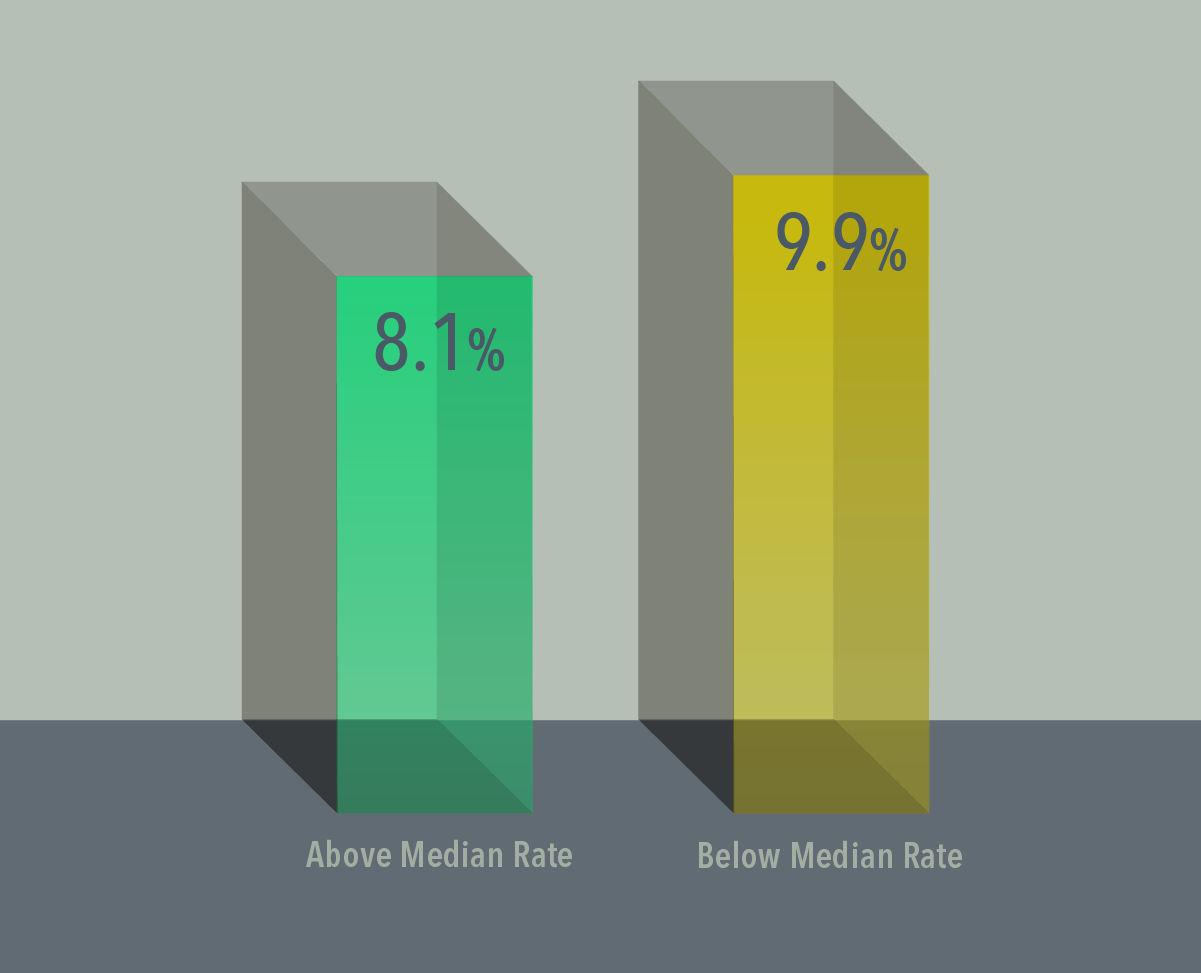
It makes sense then, that the US equity premium has historically been unrelated to the level of interest rates. In years when the One-Month US Treasury Bill rate was below its historical median, the average equity premium was about 9.9%. In above-median rate years, it was 8.1%. However, the difference between these averages is not statistically reliable,2 meaning there’s not enough evidence to support the premise that the premium is higher in one environment than the other.
Given that the evidence suggests the excess returns for stocks over bills are similar regardless of interest rate level, investors should be cautious changing up their stock/bond mix based on current yields.
EXHIBIT 1
Average Annual Equity Premium Conditional on One-Month Treasury Bill Rates at Start of Year 1927–2025
Footnotes
1. Based on market yield on US Treasury securities at 10-year constant maturity. Courtesy of Federal Reserve Bank of St. Louis.
2. The precision around the difference in these averages, measured using a t-test, is below the threshold required to distinguish from noise.
Glossary
Discount rate: A financial metric used to determine the present value of future cash flows.
Equity premium: The return difference between stocks and a risk-free asset, such as short-term Treasury bills.
Premium: A return difference between two assets or portfolios.
Yield: The return on a bond investment. Price and yield are inversely related, and as the price of a bond goes up, its yield goes down.
Disclosures
The information in this material is intended for the recipient’s background information and use only. It is provided in good faith and without any warranty or representation as to accuracy or completeness. Information and opinions presented in this material have been obtained or derived from sources believed by Dimensional to be reliable, and Dimensional has reasonable grounds to believe that all factual information herein is true as at the date of this material. It does not constitute investment advice, a recommendation, or an offer of any services or products for sale and is not intended to provide a sufficient basis on which to make an investment decision. Before acting on any information in this document, you should consider whether it is appropriate for your particular circumstances and, if appropriate, seek professional advice. It is the responsibility of any persons wishing to make a purchase to inform themselves of and observe all applicable laws and regulations. Unauthorized reproduction or transmission of this material is strictly prohibited. Dimensional accepts no responsibility for loss arising from the use of the information contained herein.
This material is not directed at any person in any jurisdiction where the availability of this material is prohibited or would subject Dimensional or its products or services to any registration, licensing, or other such legal requirements within the jurisdiction.
“Dimensional” refers to the Dimensional separate but affiliated entities generally, rather than to one particular entity. These entities are Dimensional Fund Advisors LP, Dimensional Fund Advisors Ltd., Dimensional Ireland Limited, DFA Australia Limited, Dimensional Fund Advisors Canada ULC, Dimensional Fund Advisors Pte. Ltd., Dimensional Japan Ltd., and Dimensional Hong Kong Limited.
RISKS
Investments involve risks. The investment return and principal value of an investment may fluctuate so that an investor’s shares, when redeemed, may be worth more or less than their original value. Past performance is not a guarantee of future results. There is no guarantee strategies will be successful.
CANADA
These materials have been prepared by Dimensional Fund Advisors Canada ULC. The other Dimensional entities referenced herein are not registered resident investment fund managers or portfolio managers in Canada.
This material is not intended for Quebec residents.
Commissions, trailing commissions, management fees, and expenses all may be associated with mutual fund investments. Please read the prospectus before investing. Unless otherwise noted, any indicated total rates of return reflect the historical annual compounded total returns, including changes in share or unit value and reinvestment of all dividends or other distributions, and do not take into account sales, redemption, distribution, or optional charges or income taxes payable by any security holder that would have reduced returns. Mutual funds are not guaranteed, their values change frequently, and past performance may not be repeated.
Resources